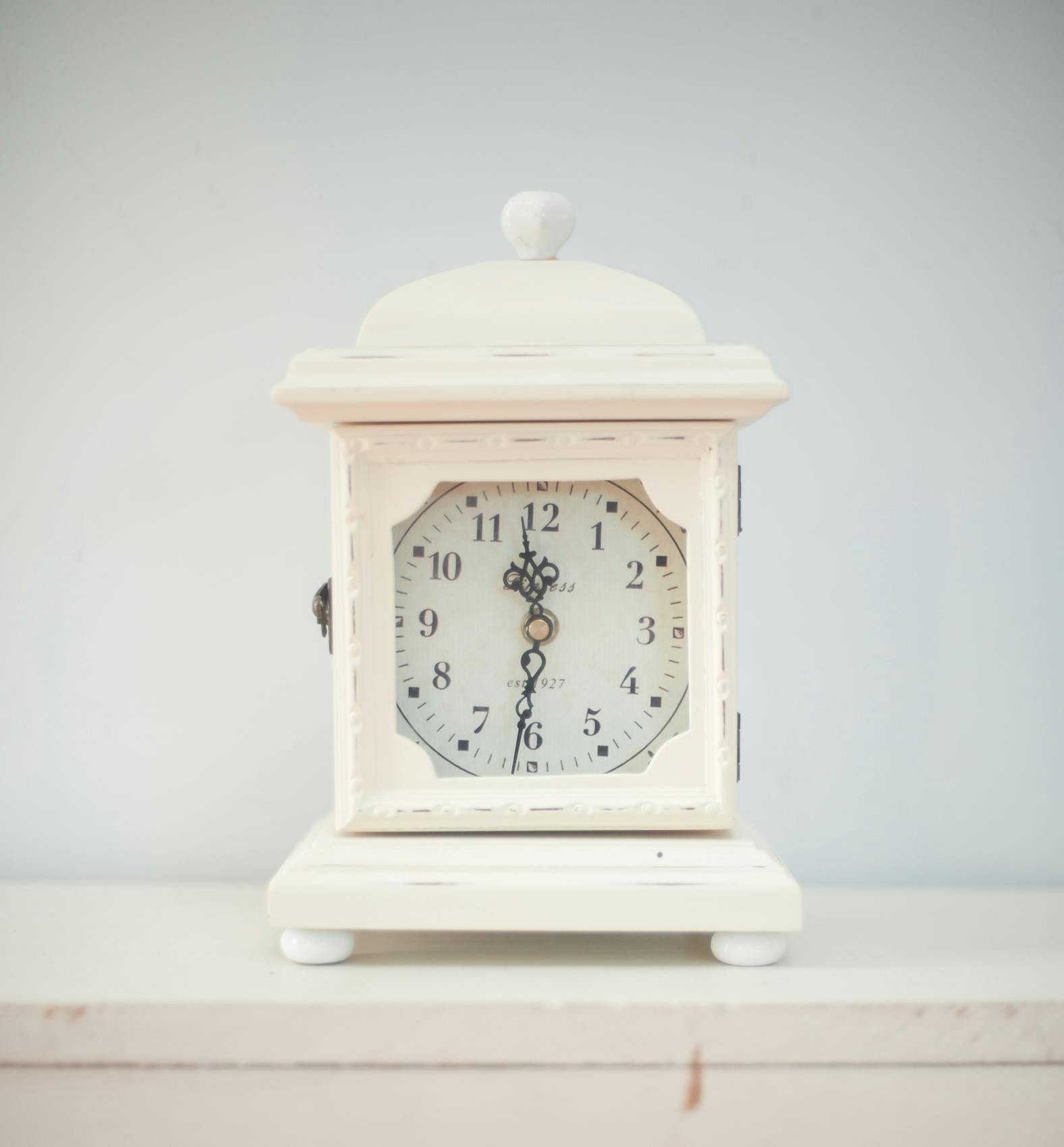
In 1990, Barry Manilow released his first Christmas album, Because It’s Christmas. It was the best-selling Christmas album that year and even peaked at 40 on the weekly Billboard 200 most popular albums across all music genres. My favorite track is the third one, which begins with a sweet orchestral rendition of Silent Night and transitions into a Manilow original song, I Guess There Ain’t No Santa Claus, which has a very catchy, piano-bar bluesy sound. In it, Manilow laments being alone at Christmas while seemingly everyone else is getting married and has someone special to celebrate with. Part of the song’s allure is the salty-sweet combination of its slightly upbeat rhythm in a minor key and the oxymoronic wish of an adult that Santa will bring him that special someone even though he knows Santa is a myth. I wouldn’t classify Manilow as a thought-provoking lyricist, but in this case he paints some vivid and extremely relatable word pictures, such as this one from the first chorus:
Jingle bells, wedding bells
Ring so merrily
But jingle bells and wedding bells
Never ring for me
Like the clock on the shelf
I hold hands with myself
I guess there ain't no Santa Claus
We all recognize holding hands as one of the first signs of a budding relationship. It’s a simple expression of affection that can be very meaningful, but it also communicates a relatively low level of commitment, which makes it the perfect analogy for Manilow to say he’s so relationship-challenged that he doesn’t even have someone he can hold hands with. The reference to a clock’s hands is actually quite clever because of how it draws you in to the miserable loneliness of this situation. Unlike the comfortable, natural, and willing connection of the hands of a couple in love, a clock’s hands are more like arms joined at the elbows whose pivot point is in the middle of its face — an unnatural position for humans. If you’ve ever felt the awkwardness of being alone in a social setting you are also probably familiar with the pressure of being forced to assume an absurd pose in a futile attempt to communicate that you’re OK with your plight. There you sit, ridiculously contorted extremities and all, perched on a ledge suspended on a blank wall, with nary a knick-knack to keep you company, having nothing to do and no one to do it with except to collect dust as time slips through your fingers while you hold hands with yourself.
As embarrassingly pathetic as that image is, you can certainly relate to it, can’t you? I know I do. Maybe your issue is like Manilow’s: you long for love and the intimacy of a married relationship, but you haven’t found the right person. Maybe you’re in a relationship, but there’s some other context in which you feel unseen, unwanted, or just generally out of place in your surroundings, alone in a sea of people. Regardless of the reason or the context, I think it’s safe to say that the consensus amongst shelf-sitters is that they’d rather be doing something — anything — else.
Maybe your on-the-shelf situation is like mine: out of work and struggling to find a new job. They may have said it wasn’t personal when they let you go, but when it came time to make those “hard choices” there had to have been a reason your name was put on the list instead of someone else’s, didn’t there? Regardless of whether a company ghosts you, tells you straight up you aren’t good enough, or tries to soften the blow with “we’ve decided to pursue others who are more closely aligned with our needs,” rejection still hurts, doesn’t it? When you face a constant barrage of both well and ill-intentioned people telling you that your resume, your job search strategy, or your use or lack of use of AI are to blame for your failure to land, you begin to seriously doubt whether you’re even capable of holding hands with yourself, much less with anyone else, don’t you?
We chuckle to ourselves when, out of desperate loneliness, Manilow concludes, “I guess there ain’t no Santa Claus” because, of all the possible explanations for being shelved, that Santa didn’t come through in the clutch is hardly the most likely. Unfortunately, in the real world, when we find ourselves wrestling with being put on the shelf, the one whose existence and character we doubt isn’t Kris Kringle’s, but God’s, and that’s no laughing matter.
I’ve spent a lot of time on the shelf throughout my life, not just in the past couple of years. Typically, in my experience, God goes out of His way to not only put me on the shelf, but also make sure I am extremely aware of the fact that He intentionally put me there. Some of my stints on the shelf were relatively short; others were excruciatingly interminable. As an experienced shelf-sitter, I can tell you that it’s neither easy nor pleasant, especially for a goal-oriented person like me. In fact, it can be very frustrating and demoralizing. I can also tell you that moping around wishing you weren’t there doesn’t shorten your time on the shelf or improve the quality of the experience. What does make a difference is changing your understanding of what’s really going on, which means learning to view your shelf-time from the perspective of the One who put you there.
There are several passages in the Bible that compare our relationship with God to that of clay with respect to its potter. The point of these analogies is consistent and clear: God, the potter, is in control of the entire process and He shapes us, the clay, into what He wants us to be. The clay really has no say in the matter; if it doesn’t cooperate, the potter will just smush it into a big ball, throw it back down on the wheel, and start over again. I’ve wrestled with God in the past over the control issue, and I lost every single time until I understood that God doesn’t want to use His sovereign power to crush me, but rather to transform me into something more beautiful and complete than anything I could make myself into because He is good and compassionate and loves me. Before you can come to terms with sitting on a shelf, you must first resolve any resistance you have to the truth that He has the absolute right to put you there.
Generally speaking, that’s where I am. There are moments when my rebellious spirit incites me to attempt to assert that I’m the one who should be calling the shots, but for the most part I have no problem with God deciding how He wants to fashion me, and I’ve come to appreciate the results. Increasingly, I’m also becoming more comfortable with the process, even though portions of it (like being placed in a kiln) aren’t all that comfortable. The part that I’m struggling with currently is that I don’t want to sit anymore. I want to be used, to do something that makes all that molding, shaping, and firing seem worthwhile. To me, sitting on the shelf not only doesn’t accomplish anything, but it also seems to devalue everything I’ve endured — especially the time in the kiln.
But then, in the only reference to the potter/clay dynamic in the New Testament, the Apostle Paul drops this little truth-bomb:
On the contrary, who are you, O man, who answers back to God? The thing molded will not say to the molder, “Why did you make me like this,” will it? Or does not the potter have a right over the clay, to make from the same lump one vessel for honorable use and another for common use? (Romans 9:20-21)
In context, Paul is explaining the role of both Jews and Gentiles in the body of Christ — a revolutionary and extremely divisive issue in the first century Church. Without delving into the particulars of that debate, we just need to recognize that Paul is calling out each group for its improper attitude towards the other by considering themselves to the honorable vessels, and therefore central to God’s plan, while viewing the other group as common, incidental, and inconsequential in the grand scheme of things. While the topic of sitting on a shelf has nothing to do with that conversation, the principle Paul asserts here is very applicable: the thing that is made has no right to challenge the one who made it for either how it was made or how it is used after it is made.
As I glance around my office as I write this, the truth being communicated here shouts back at me. There are books sitting on my shelves that were written decades ago, most of which I only open occasionally. There are a couple, like my Greek grammar books, that are extremely well-worn because I used to live in them — 40 years ago when I was studying Greek in college. Since then, do you know where they’ve been? On the shelf. I still pull them out from time to time to remember and clarify a concept, so they still have a lot of value to me, but their value can’t be measured exclusively based on how often I open them.
On the other side of the entryway from my office is our dining room which contains a hutch where my wife stores all the special dishes that we only use during the holidays or when we’re having special guests for dinner. Some of them have been in our family for a couple of generations, so they trigger memories when they are used. Their actual retail value, which is probably greater than we think it is, is irrelevant, because of the traditions they represent and feelings they evoke. To us, they are special, what Paul calls “vessels for honorable use,” and it is precisely for that reason that we keep them in the hutch most of the year. Having said that, just because most of the everyday dishes we keep in the kitchen cabinets could be replaced by a quick trip to Wal-Mart (“vessels for common use”) doesn’t mean they aren’t valuable — it simply means they serve a different purpose. In fact, there would be significant turmoil if any of my wife’s 9″x13″ glass baking dishes were to ever be broken, because she uses specific ones for specific reasons all the time.
What’s interesting to note about the books, the dishes, and pretty much everything we own is that, no matter how much they’re used or how valuable they are, they spend most of their time on the shelf. Look around your own home or office and take note of all the things that just sit there. Yes, many of them are extremely utilitarian, while others exist strictly for their aesthetic qualities; and yet, regardless of function or value, most of the time they just sit on their shelves. The tools in your garage or shed, the clothes in your closet and drawers, the phone in your pocket — even if it’s something you insist you use “all the time” the reality is, in one way or another, they’re all shelf-sitters. They’re very much appreciated and extremely useful for relatively brief moments in time, but for most of their existence all they do is sit. And let’s not forget to give a shout out to all the shelves, drawers, and hutches of the world which don’t do anything themselves except hold and store all the actually useful things when we’re not actually using them.
“Yeah, but I’m a person, not a thing,” you might object, and you would be right to do so. You are different and more valuable than things. The Father specifically and intentionally created you, the Son sacrificed His own life to redeem you, and the Spirit has committed His existence to sealing, teaching, and transforming you. That makes you extremely valuable. However, none of that detracts from the fact that you’re still clay, still subject to the Potter for not only what you look like and what you do, but also when, how, and where He chooses to use or not use you. Paul says it’s neither your place nor mine to question why He’s made us the way He has, or to lament when He doesn’t use us the way we think He ought to.
Recently, over a two-week span, four different people in independent and disconnected contexts asked me the exact same question: “Why do you think you haven’t landed a job?” After nearly two years of searching, it’s a legitimate question. The people who asked it all love me, are genuinely concerned for my well-being, and are sincerely confused by my situation. In each instance, I was compelled to give the same answer and do it in a confident and contented tone: “Because God doesn’t want me to have one yet.” At the same time, I wondered why He was making me repeat it over and over again out loud.
Then it hit me. I have truly come to a place where I am content and confident that God will provide a job for me when He is ready to do so, but I realized there were other areas of my life in which I felt I was being overlooked, underappreciated, and unfairly shelved. Ironically, I had been using my acceptance of my job situation to mask my discontent for the other areas where I felt I was being slighted. That’s not how the potter/clay relationship works. Part of being content with how He’s made me means being content with how He uses me — or doesn’t — in every area of my life, not just one.
Beyond that, however, I began to see there was a completely different perspective to sitting on the shelf I was ignoring. I hadn’t considered the fact that the more special and honorable the vessel is, the less frequently it tends to be used, which means the more time it spends on the shelf. From that point of view, the shelf isn’t a lonely place of abandon, it’s a prominent position of honor. Being put there doesn’t mean you’re not wanted, appreciated, or needed; instead, it communicates that you have been specifically set aside and dedicated to a particular use. In biblical parlance, the words used to describe those kinds of vessels are “sanctified” and “holy.” That kind of puts an entirely different spin on shelf-sitting, doesn’t it?
If you feel like a common vessel that’s getting worn out through constant use and abuse, be grateful for and mindful of the impact that you’re making daily in people’s lives. It is always a honor and a privilege to be actively used in the service of your Maker. But if you find yourself sitting on the shelf a lot, don’t consider yourself forgotten or unwanted. Instead, view your shelf-sitting as a reminder that the Potter created you for a special purpose, sanctified you, and dedicated you as holy. Learn to view yourself as He desgined you to be, which is unlike anything or anyone else He has created, and recognize that even being put on the shelf is an expression of how much He loves and values you.


1 thought on “On The Shelf”
A different perspective on an old theme. As I look around my office I see different reasons for keeping things on my shelves:
Reserved for a specific use, a specific time. (just the right tool when needed)
To remind me of a specific time, a specific situation.
To remind me of people who have had an impact on my life.
To remind me of the value they were to me.
To give an answer to a present situation.
The importance of always being ready (available) for when needed.
To remind me of how God has used me in unexpected ways.
To remind me of how God has always been faithful.
To remind me of how truly rich I am.